A Roundup of the Inbox – news and events around Telford and Shropshire
New SaTH non-executive directors
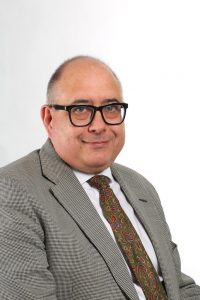 Dr David Lee and
 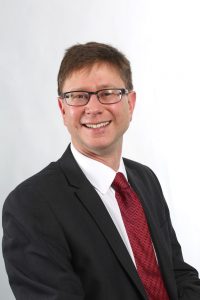 Dr Chris Weiner (of roast coffee fame) have been elected to the Board of SaTH as non-executive directors.
This bodes well as both have a wealth of experience and considerable common sense. David’s experience as a GP who has worked in a number of sectors and Chris’ experience in public health will enable them to see issues through different prisms and hopefully we will get some creative solutions to the undoubted difficulties facing SaTH. Here’s hoping that they enjoy the challenge and the network looks forward hearing about the positive outcomes as they work towards more ‘joined-up’ healthcare. Chris kindly came to talk to us a while back and David is going to help develop an education programme for the autumn. He is also going to bring his gentle style and incisive thinking to the next significant event meeting in August (see the events page for more detail about the date and timings of the meeting). Bring along your significant events for discussion. It is worth saying that there are two levels of significant events: The GMC level ones which you have to declare at appraisal and which are incredibly infrequent and the practice level events which are useful to reflect on to improve our practice. Peer review, and obtaining different perspectives, is an essential part of the learning process, but this is often not availble to us when we are salaried or working as a locum. It is human nature to focus on the adverse events and take for granted all the good stuff we do on a daily basis.
“Feelings of worth can flourish only in an atmosphere where individual differences are appreciated, mistakes are tolerated, communication is open, and rules are flexible – the kind of atmosphere that is found in a nurturing family” (or the Shropshire Sessional GP Network) Virginia Satir
Wellbeing
Paean, the local peer mentoring service at T&W CCG has finally achieved funding for this year and the service is set to take the next stage in its development in conjunction with the Mentoring service in Nottinghamshire and Derbyshire (GP-S). Established in 2008, it is currently funded with non-recurring monies and there is uncertainty every year about whether we can continue to operate. The good news is that we can! We are linking with GP-S, a mentoring service operating in other parts of the North Midlands. This will improve the back office functions and prevent the glitches we have experienced in the past 12 months. You will continue to be able to access mentoring support by a trained and experienced senior colleague……it comes highly recommended by those who have tried it.In preparation for requesting permanent funding we are sourcing as much information as possible from potential users of the service. It would really help us if you could take 5 mins of your time (over a cup of your favourite beverage) and complete the survey which will serve to inform the service of the current state of need in the wider GP community – your response will be important and this is your chance to influence the development of a coaching/mentoring service for enhanced wellbeing in the GP community – the mentoring service is very grateful to you for your response.
GP Wellbeing was also discussed at the latest appraisers conference.
In 2014, the GMC published a booklet called “Your Health Matters, practical tips and sources of support”. This states that it is import to:
- Make sure you are registered with a GP and trust them to give you confidential help
- Seek help as early as possible when you are unwell, avoid self diagnosis and self prescribing for anything but minor ailments
- Note early warning signs of illness and take them seriously eg feeling low and irritable of having poor concentration and low energy may be a sign of burnout (Note:- no mention of phsyical illness!)
- Avoid corridor consultations. If you think you need to consult a doctor then do so in privacy
- Be sensitive to the needs of you colleagues and encourage them to seek help if you are concerned about their health
- Try to maintain a healthy work-life balanc. If you develop problems then try sharing with friends, colleagues or family
- Get help! If you are worried about your drinking or someone close to you has rasied concerns, then the chances are that you are drinking too much. Get help before it gets out of control
The difficulty for us to act on these statements is down to uncertainty – What if I am wrong? What if my GP doesn’t know as much about it as I do? and 10 mins is a very short time in which to have an in depth conversation. We all know that the first consultation is usually a fact-finding one and that we are likely to need further discussion or even an examination (very hard if your fear is around colorectal cancer!)
If you don’t take the all important first step, then you may delay diagnosis and become ill. Colleagues may worry about you and wonder what to do, especially if you start to make mistakes that affect your patients. You may have had these concerns about colleagues too. There is a flowchart on the GMC website, “Raising and Acting on Concerns about Patient Safety, your duty to raise concerns”. Most importantly record concerns you have about yourself or a colleague and any steps you have taken and seek the advice and support of a colleague. It’s quite a busy page.
Whilst I do not think many of you are likely to need this advice and guidance, you might like to be aware of where to find it!
Useful contact details
The anonymous GMC helpline is 0161 923 6602 or email practice@gmc-uk.org.
The anonymous and confidential BMA helpline, should you need it is 0330 123 1245.
The National GP Health service is an alternative source for support for those with symptoms indicating mental health issues.
Prescribing Information from T&W and Shropshire CCGs
There is new guidance about COPD from the Medicines Management team at Telford and Wrekin about COPD.
There is an animation about antibiotic use and why we should avoid reaching for them is available from the Medicines Optimisation team at Shropshire CCG.
And from other sources:
- Short term use of oral corticosteroids and related harms among adults in the United States: population based cohort study is an article published in the BMJ. Nollermothu et al looked at the adverse effects of prescribing a short course of steroids. They report that within 30 days of corticosteroid initiation, the incidence of acute adverse events that result in major morbidity and mortality (sepsis, venous thromboembolism, fracture) increased by twofold, to fivefold above background rates. They suggest that greater attention to initiating prescriptions of these drugs and monitoring for adverse effects may potentially improve patient safety. Steroids are so widely used in a multiplicity of conditions and intraarticular injections also have systemic effects. Worth a read! Does anyone have any up to date information on the current perceptions of cumulative doses of steroids?
- An editorial in JAMA summarises the issues in prescribing opioids in pain management. The article calls for both urgency and balance. I have started to challenge patients on regular prescriptions of high dose co-codamol especially if they underuse it significantly and particularly if they only take it at night – this would seem to be more likely to be the use of side effects for another reason!
Mythbusting
This was published in the Rheumatology Network online magazine – Whilst it is a synopsis of research from the States, it may give you some very interesting conversation points to have with patients especially about the trainers they might choose to wear.
The good news is that the team at Nottingham have come up with a risk prediction tool for SLE – which is great, if you, like me, worry about never having diagnosed this condition. There is apparently an average of 5 years between first presentation and diagnosis which may make a considerable difference to patients. The following early clinical features occurred most often in systemic lupus erythematosus cases: arthritis or arthralgia, rash, fatigue, headache, and depression. According to Professor Doherty and the team, the best fitting risk prediction model includes the following variables: age, sex, consultation rate, arthralgia or arthritis, rash, alopecia, sicca, Raynaud phenomenon, serositis, and fatigue.
Cyber crimes

Further to recent ransomware attacks, Midlands and Lancashire CSU’s IT teams have been monitoring systems closely and patches have been issued, in accordance with latest guidance from suppliers. So far, we are pleased to report that the current software is picking up the new variant recently reported.
No system of patching and Anti-Virus software is absolutely fool proof and therefore we are asking everyone to:
- Remain vigilant with regard to computer viruses and other Malware
- Be extra vigilant when using email services – don’t open attachments or follow links within unsolicited emails
- When prompted by your computer read system messages carefully and if in doubt contact the IT service desk before accepting system and Anti-Virus patches. It is important for the continued security of your device that system and Anti-Virus patches are applied when issued
- Should you suspect suspicious activity or ransomware messages appearing on your screen you should immediately shut your device down, mark it as quarantined and report it to the MLCSU IT Support Desk.
If you need any further information please do not hesitate to contact the IT Support Desk 01743 817870.
What is going on around the country?
- Rachel Clarke’s book “Your life in My Hands” is reviewed in the Sunday Times by Henry Marsh – two intensely powerful communicators with a passion for the NHS. I quote his review, “There have been many books written by young doctors, mostly of a satirical or cynical nature, but none comes close to Clarke’s in describing the physical and emotional exhaustion, and the intense highs and lows, of working as a hospital doctor.” Rachel’s first degree was PPE at Oxford and she then worked in journalism and at times as she tweets and writes her blogs, it has seemed that Jeremy Hunt has more than met his match. She is certainly more charismatic and has the NHS at the heart of all she does publicaly. I’ve pre-ordered my copy! One for Deborah Shepherd’s Women in Medicine Bookclub.
- Paula Wright, a sessional GP, an educator and keen disseminator of information, has published the first of two videos on You Tube about reflection for appraisal. Reflection in appraisal documentation does not come naturally to many of us, we tend to do it instinctively and without realising what we take on board but when it gets to appraisal we are expected to produce a document detailing the reflection we have done (a way of increasing CPR points is to justify what we do naturally for the benefit of our patients) so it might be worth looking the short presentation.
- Have a look at the events pages where you will find details of a free Womens Health Update by Mr Najum Qureshi, a consultant gynaecologist at the Birmingham Women’s Hospital, will be delivering a morning of lectures at the Village Hotel in Dudley which is free to attend, and an Orthopaedic Study Day by Mr Stuart Hay on Thursday 14th September.
- There is a lot of misinformation about Lyme Disease and Peter Taylor thought that you might be interested to have access to two articles which he has found particularly helpful when working in practices in rural Shropshire – Thanks Peter. The first is from Canada (The epidemiology, prevention, investigation and treatment of Lyme borreliosis in United Kingdom patients: A position statement by the British Infection Association) and is great because it lists all the stuff a GP needs to be able to deal with in the consultation, the second (Lyme Disease statement_for_managing_from Canada) is a review article from the British Infection Association, which is a useful summary – NICE guidelines are expected to be available in 2018.
Mental Health – Psychosis Awareness
The West Midlands Mental Health Clinical Network in NHS England is continuing to work towards implementation of the Mental Health Five Year Forward View. As part of this there is an initiative to spot the first episode of psychosis and practices have been asked to display the poster in a ‘line of sight area’ (I wonder how many organisations make the same request and how the surgeries would look if every poster were displayed – patients might be overwhelmed!!) I am not sure what the waiting times are for early intervention in psychosis (‘EIP’ – it would be wouldn’t it?!) but I think it is fair to say that the services locally are pretty stretched for all psychiatric conditions requiring consultant input). Here is the 57 page booklet.
How Much Do You Know About Your Responsibilities In Cases Of Private Fostering?
The Fostering Guide, published by Telford and Wrekin Council may help you to become more aware of the legal requirements incumbent on you as a GP with regard to children who are cared for in private fostering agreements. Private fostering arrangements may be where a family member such as a grandparent takes on the parental role for a child. It is important to remember the possibility that some of the children may be trafficked, which makes it even harder for us when we see a child accompanied by an older adult. Here is a Safeguarding page on the topic:
And Now For Something Completely Different
Just because you are a sessional GP doesn’t mean that you aren’t a leader, with enormous potential in the healthcare system – there are some incredibly inspiring people doing a very similar role but who are developing leadership skills in the process. The first notification about leadership training is from the highly recommended 1 year programme run for Telford and Wrekin CCG by Alaistair Olby. The second is from the Faculty of Medical Leadership and Management (see below) who hold an annual 2 or 3 day conference and discuss many aspects of how medical leaders can use their undoubted skills to take back control of some of the leadership and management concerns that we face in our day to day work. The atmosphere in the meetings is very vibrant and there is a registrars programme as well as one for the more seasoned of us – it is amazingly sociable too.
Clinical Leadership Programme Overview 2017-2018
Clinical Leadership Programme Application 2017-2018
Are you serious about developing your leadership skills?
Join us at Leaders in Healthcare 2017
30 October – 1 November
We invite you to join us in Liverpool in October for the second Leaders in Healthcare conference. The theme for this year’s conference is ‘developing leaders, building networks and inspiring innovation‘.There are just two months left to secure the best value delegate rate with the early bird discount. Explore the programme Meet with colleagues, build your networks, gain insight, information and practical support, and discuss best practice with leaders from healthcare and other sectors. Register your place today We are proud to announce the keynote speakers confirmed so far:Professor Sir Bruce Keogh, National Medical Director, NHS England.
Gulwali Passarlay, Afghan refugee, author, TEDx speaker and politics major at University of Manchester
Nicky Moffat, the highest ranked female officer in the British Army, with almost thirty years of service leadership.
New for 2017
The conference this year will have a wider range of breakfast network sessions allowing you more time to meet with like-minded colleagues.
Our interactive theatre within the exhibition will provide opportunities for you to see showcases of innovative work.
There will also be a brand new networking space for you to meet up with different groups.
Leaders in Healthcare provides the opportunity to find peer support and build professional networks with healthcare professionals from across the UK and beyond.
Join us at Leaders in Healthcare 2017
We look forward to welcoming you to Leaders in Healthcare 2017.
Best wishes,
FMLM team, Faculty of Medical Leadership and Management
Here’s hoping you have a great time – don’t forget the Significant Event Meeting in August!